Starting the QA Testing Process
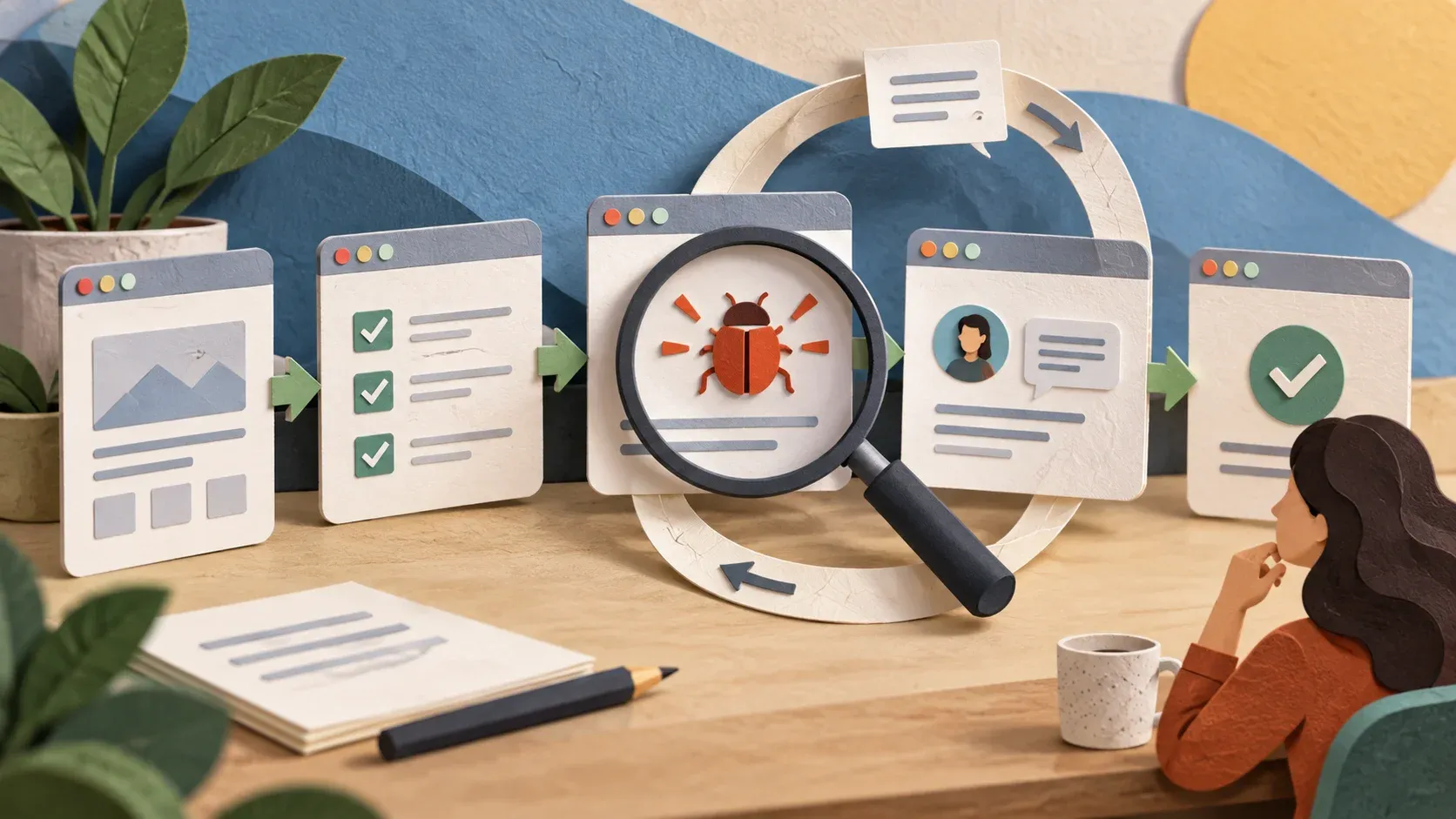
A productive test effort starts with clarity. Before building a long checklist, understand what is changing, what the user needs, and what could go wrong.
The process does not have to be heavy. Requirements, a focused plan, clear cases, and useful feedback give the team a practical way to learn about the product.
1. Understand the requirements
Read the proposed behavior and ask questions before treating assumptions as facts. Product managers and product owners are useful partners, but requirements may also come from support, operations, developers, or the people using the product.
Turn broad statements into observable examples. If a request says “prevent invalid reservations,” ask what counts as invalid, how availability is checked, what the customer sees, and whether a failed request changes any data.
Write unresolved questions down. Otherwise, a tester and a developer may silently implement different interpretations.
2. Make a focused plan
Identify the features, risks, people, schedule, environments, and approach. Prioritize the failures with the greatest impact.
For a fictional reservation feature, an incorrect button color and selling more tickets than exist are both defects, but they do not carry the same release risk. Spend attention accordingly.
Agree on what is outside scope and what evidence will be needed for the release decision.
3. Create repeatable test cases
A test case should have a clear objective, preconditions, input, actions, and expected outcome. Record the actual result separately when you execute it.
Keep each case focused enough that a failure is understandable. There is no useful universal requirement for a particular number of steps. Two steps may be sufficient; a legitimate workflow may need more. Split a case when it contains unrelated goals.
Give cases stable identifiers and link defects back to them. Record the build and environment so another person can repeat the same check.
4. Test beyond the expected path
Include valid input, invalid input, boundary values, interruptions, and recovery. Explore areas where the requirements are incomplete.
When a check fails, collect evidence before resetting the environment. A screenshot may explain the visible symptom; a request identifier or relevant response may explain which operation failed. Keep unrelated personal data out of the report.
5. Retest and communicate
After a fix, repeat the failing case and examine nearby behavior that could have been affected. Update cases when the intended behavior changes.
Finish with a short account of coverage, failures, untested areas, and remaining risk. A pass count alone cannot tell the team whether an important workflow is safe to release.
Automate selected stable checks when repeated execution will provide useful feedback. Preserve time for investigation and exploration. The goal is a dependable testing process, not the largest possible collection of scripts.